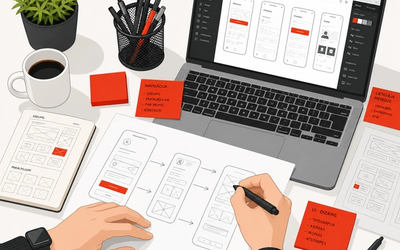
What is User Centered Design: what is user centered design in UX?

Outrank AI 28.12.2025 18min

Ever heard the phrase "the customer is always right"? User-Centered Design (UCD) is what that looks like in the digital world. It’s a design philosophy that puts real people, your actual users, at the very centre of every single decision.

Instead of guessing what your customers might want or need, this approach is all about finding out for sure. It’s the difference between a bespoke, tailor-made suit and one you just grab off the rack hoping it fits.

Putting Customers at the Heart of Your Business

Imagine building a website based entirely on your own assumptions and whatyouthink looks good. It’s a common mistake. User-Centered Design completely flips that script. It starts with a deep, evidence-based understanding of your audience.

It’s a practical way of working that focuses on uncovering your users' goals, frustrations, and behavioursbeforea single line of code is written.

This customer-first mindset goes far beyond aesthetics; it’s about creating something that’s genuinely functional and built with empathy. By involving real users throughout the design journey—from the first sketch to the final product—you kill the guesswork. This massively reduces the risk of building something that completely misses the mark.

From Assumptions to Evidence

At its core, UCD is about making the switch from "I think" to "I know." It moves you away from decisions based on gut feelings and towards insights backed by real data and feedback. Instead of your team guessing what users want, you use proper research to get the answers directly from them.

This process isn't just theory. It helps businesses like yours to:

  • Pinpoint real user needs: Find out what truly motivates your customers and what headaches you can solve for them.

  • Validate ideas early: Test concepts with actual users to confirm you’re on the right track before spending serious money.

  • Prioritise features that matter: Focus your development budget on building things that deliver genuine value to the people using your site.

When you prioritise your audience, you create digital experiences that don't just look great, but work flawlessly for the people who matter most—your customers. This focus leads directly to tangible results like higher engagement, better conversions, and long-term loyalty.

Ultimately, this whole process builds a rock-solid foundation for success. Knowinghow to measure customer satisfactionis a crucial part of this cycle, as it gives you the hard numbers to see the impact of your efforts. When users feel understood, they don’t just buy from you once; they become your biggest fans.

The Core Principles of User Centered Design

User-Centred Design isn't just a feel-good idea; it’s a practical way of working built on solid, actionable principles. These core ideas are what separate a good project from a great one, turning pure guesswork into a repeatable process that actually gets results.

Think of these principles as the four legs of a sturdy table. If one is weak or missing, the whole thing wobbles. Get all four right, and you’ve built something solid that can support real business goals.

A Relentless Focus on the User

This is the big one. It’s an unwavering focus on the people who will actually click, scroll, and buy. This goes way beyond simple demographics like age or location. You need to get into their heads to understand their real goals, their frustrations, and the context they're in when they land on your site.

Why are they here? What problem are they trying to solveright now?

You uncover this by talking to them. You use interviews, surveys, and simple observation to build a clear picture of who you're designing for. This is where tools likehow to create user personasbecome invaluable. It’s about grounding every single decision in real human needs, not just what the teamthinksis a good idea.

Empirical Measurement and Data

Gut feelings are great for ordering lunch, but they’re terrible for building a website. The second principle isempirical measurement, which is just a fancy way of saying "let the data decide." Instead of arguing in a meeting about which button colour is best, you test both versions with real users and see which one gets more clicks. Simple.

This data-first approach takes ego out of the design process. It aligns everyone around a single mission: making what works best for the user. We get this data from a few key places:

  • Usability Testing: We sit people down and watch them try to use a prototype. It’s amazing what you learn when you see someone struggle with something you thought was obvious.

  • Web Analytics: We look at how people are behaving on the live site. Where do they click? How long do they stick around? Where are they giving up and leaving?

  • A/B Testing: We show one version of a page to half our visitors and a different version to the other half. The version that leads to more sign-ups or sales wins.

A design isn't finished until it’s been tested and validated by the people it was built for. This keeps decisions grounded in evidence and dramatically cuts the risk of launching something that falls flat.

Iterative Design and Refinement

Finally, we haveiterative design. This means you don't just design something, build it, and launch it. That's a recipe for expensive mistakes. Instead, you work in a continuous cycle: prototype, test, analyse, and refine. Build a small, rough version of an idea, get it in front of users, see what they do, and make it better.

This loop gives you the flexibility to adapt and improve as you go. It's far cheaper and faster to fix a confusing layout in a simple wireframe than it is to re-engineer a fully coded feature after launch. Each loop, or 'iteration', brings you a step closer to a solution that nails both user needs and business goals.

A Step-by-Step Guide to the UCD Process

Knowing the principles ofUser-Centred Design (UCD)is one thing. Watching them click into place as a repeatable, structured process is something else entirely. UCD isn’t just a nice idea; it’s a disciplined method that takes a project from a vague concept to a polished final product that actually works for people.

For any business owner, this process is your best defence against risk. It methodically swaps guesswork for evidence, making sure your investment goes into building something your customers genuinely need and will use. The whole thing typically plays out across four distinct phases.

Phase 1: Understand User Context

Every great project starts with understanding. Before you can even think about solving a problem, you have to get to know the people who are living it. This first phase is all about research and empathy—digging deeper than surface-level demographics to uncover what truly motivates people, how they behave, and where their frustrations lie.

We don't guess who your users are; we go out and meet them. The key activities here are:

  • User Interviews: Real, one-on-one conversations that let us hear about user experiences straight from the source.

  • Surveys: A way to gather quantitative data to spot widespread patterns and priorities across a larger group.

  • Persona Creation: We build detailed profiles of your ideal users based on our research. These aren't imaginary friends; they're anchors that keep the team focused on designing for real people.

Phase 2: Specify User Requirements

Once you have a rich picture of your users, the next step is to turn all those insights into a clear, actionable plan. This 'Specify' phase is the bridge between research and design. It’s where we define exactly what the product needs to do to solve user problems while hitting your business goals.

This is far more than a technical to-do list; it’s a strategic definition of success. We crystallise our findings into specific requirements and map out the ideal journey someone will take through your website. This guarantees that every feature we build has a clear purpose tied directly to a real user need.

This methodical approach transforms abstract user feedback into concrete design objectives. It’s about setting clear goalposts for the project, ensuring that both your team and your users are heading in the same direction.

Phase 3: Design Solutions

Now for the creative part. In the 'Design' phase, we finally start bringing potential solutions to life. This stage is highly visual and collaborative, moving from rough, low-fidelity sketches all the way to interactive prototypes. The goal isn’t to build the final product just yet, but to create testable models that let us explore ideas quickly and cheaply.

The main outputs you’ll see are:

  1. Wireframes: Simple blueprints that map out the structure and layout of each page. The focus here is on function, not looks.

  2. Prototypes: Clickable, interactive models of the website that simulate the real user experience. This lets us conduct realistic tests long before a single line of code is written.

Phase 4: Evaluate Against Requirements

The final phase is the moment of truth: validation. We take our prototypes and put them in front of real users to see how they hold up. This usability testing is where the theory of our design smacks into the reality of human behaviour. Does the navigation actually make sense? Can people complete key tasks without getting frustrated? Where do they get stuck?

The feedback we gather here is pure gold. It tells us what’s working and, more importantly, what isn’t. This is the operational core of UCD, a cycle that's becoming deeply embedded in UK product development. In fact, recent UX surveys show that around74% of practitionersfind that research meaningfully informs their decision-making. If you're curious, you can dig into more data by checking outthe latest industry findings on Maze.com.

This loop of testing and refining ensures the final product isn't just launched; it's launched with confidence.

Here’s the rewritten section, crafted to sound like an experienced human expert, following all the specified requirements.

The Real Business Pay-Off From User-Centred Design

Let's be clear: investing in User-Centred Design (UCD) isn't about making your website look pretty. It's one of the sharpest commercial decisions you can make, delivering a tangible return that you’ll see right on your balance sheet.

When you put your users' actual needs at the heart of your project, you stop guessing and start solving. You smooth out all the friction from the moments that matter most—whether that’s hitting ‘buy now’, filling in a contact form, or just finding a crucial piece of information. The result? A direct, and often dramatic, lift in conversions.

More Conversions, More Loyalty

When a website justworks, customers don't have to think. They just do. That seamless experience builds an incredible amount of trust and satisfaction, which are the absolute bedrock of customer loyalty. A happy customer, one who didn't have to fight your website to get what they wanted, is far more likely to come back.

This isn't just some fluffy theory. We've seen UK-focused projects where simple, research-led tweaks to the navigation and checkout process boosted conversions by30% to 50%. By getting obstacles out of the way, you’re literally paving a smoother path for people to give you their money. You can dive deeper into these kinds of results in theseweb design statistics from UK projects on sqmagazine.co.uk.

An intuitive digital experience doesn't just attract customers; it keeps them. By making their lives easier, you build a loyal base that sees your brand as reliable and trustworthy, encouraging repeat business and positive word-of-mouth.

Cut Your Development and Support Costs

Here’s a benefit that often gets missed but has a huge impact: UCD slashes your long-term costs. The old way of doing things—building an entire product based on a hunch—is a massive gamble. Get it wrong, and you're stuck with eye-watering bills for rework and endless delays after you've already launched.

UCD flips that entire model on its head. It helps you spot and fix usability problems right at the start, during the design phase, long before a developer has written a single line of code. Think about it: it's infinitely cheaper to change a simple wireframe than it is to rebuild a feature that's already live.

This forward-thinking approach saves you cash in two major ways:

  • Less Wasted Development: By testing your ideas with prototypes, you get to see how real users react. This means your development budget goes towards building features people actually want and will use, not just what someone in a meeting thought was a good idea.

  • Fewer Support Headaches: A website that’s easy to use answers questions before your customers even think to ask them. By anticipating their confusion, you massively reduce the number of support tickets flooding your inbox, freeing up your team for more important work.

In the end, taking the time to understand your user from day one isn't an expense. It's an investment that pays for itself by delivering a better, more profitable, and far more sustainable product.

Here's the rewritten section, designed to match the requested human-written style, tone, and formatting.

How We Weave UCD into Our Laravel Development

Powerful technology is useless if it’s a pain to use. It’s just that simple.

That’s why a human-centric approach isn’t just an add-on for us; it’s baked directly into our Laravel development process from day one. For us, UCD isn’t a box to tick—it’s the foundation everything else is built on.

This thinking starts long before our developers write a single line of code. Every project kicks off with a deep-dive discovery phase where we get crystal clear on two things: your business goals and what your users actually need. This stops us from building on assumptions and ensures every feature we create has a genuine purpose.

From this understanding, we start crafting detailed user flows and wireframes. These aren't just technical diagrams. Think of them as the architectural blueprints for the entire customer journey. We map every click and every interaction, making sure the final Laravel app isn't just technically solid, but feels logical and intuitive to the person on the other side of the screen.

Bringing Designs to Life

Once the structure is locked in, we build interactive prototypes. These are essentially working models of your future website, allowing you—and more importantly, a sample of your users—to click through the application and experience it firsthand.

This is where the magic really happens in our user-centred design process. It lets us get priceless, real-world feedback early and often. We can spot points of confusion or friction within the Laravel framework and fix them quickly and cheaply.

Changing a prototype is easy. Rebuilding a fully coded feature is not.

By testing and refining before we go into full-scale development, we kill the guesswork. This back-and-forth feedback loop means the final product is validated by real people, massively reducing the risk of launching something that just misses the mark.

Fusing Strategy with Technical Excellence

Our process shows how technical mastery in Laravel development is guided at every single step by a strategic focus on the people who will actually use the product. We make sure our robust, secure, and scalable applications are also a genuine pleasure to use. Our approach to expert UX and UI web design is completely integrated into how we build software.

The key pieces of this integrated approach look like this:

  • Discovery First: We always start with thorough user and stakeholder research to set clear goals rooted in real-world needs.

  • Visualising the Journey: We create detailed user flows and wireframes that become a shared roadmap for our designers and developers.

  • Prototyping and Testing: We build interactive prototypes for early user testing, so we can gather feedback and make smart adjustments.

  • Iterative Development: We refine the application based on what we learn from testing, ensuring the final Laravel build is both powerful and perfectly aligned with what users expect.

This fusion of smart strategy and clean code results in custom web applications that don't just work flawlessly—they deliver real value to your users, driving engagement, conversions, and long-term success for your business.

Here's the rewritten section, crafted to match the human-written, expert tone of the provided examples.

Why UCD Is Your Unfair Advantage

In a market this crowded, User-Centred Design (UCD) isn't just a nice-to-have. It’s the very core of a winning strategy.

Think about it. UCD systematically de-risks your entire development process. Instead of building based on internal assumptions or a founder's best guess, every decision is grounded in solid evidence. It’s a simple but powerful shift from "we think our users want this" to "weknowthey need it." That shift is what separates the businesses that thrive from those that just get by.

When you put your users first, you stop building websites that are just visually appealing and start creating digital experiences that genuinely work. The results aren't fuzzy, either. We're talking about measurable outcomes: more sales, a stronger brand, and customers who don't just buy from you once, but stick around for the long haul.

From Niche Tactic to Business Must-Have

This isn't just a hunch; the numbers back it up. UCD has gone from being a niche practice to a full-blown business priority for UK companies. Recent industry reports make it clear that a huge majority of businesses now see user research and UX investment as direct drivers for growth.

Take small businesses, for example. Around56%of them planned website overhauls specifically to improve usability and get more conversions, putting real money into design systems and UCD. The demand is undeniable. If you want to dig deeper into this trend, you canlearn more about the demand for UX design in the UK on intelligentpeople.co.uk.

In the end, the business that provides the best user experience almost always wins. It's the most reliable way to build a product that people not only choose but actively champion.

Here’s a simple exercise: look at your own website through your customers' eyes. Are you making their lives easier or are you just adding friction? A user-centred approach can completely reshape your next project, turning your website from a simple online brochure into your most powerful asset.

Got Questions About User-Centred Design?

We’ve walked through the what, why, and how of user-centred design, but I find a few key questions always pop up with business owners. Let’s tackle them head-on.

Isn't User Research Just an Extra Cost?

I get it. On paper, user research looks like another line item on the invoice. But you should really think of it as insurance against much, much bigger costs down the road.

Fixing a fundamental usability problem after your website is live means expensive code changes, developer time, and potentially a full-blown redesign. Finding that same issue during the design phase? That’s a cheap and easy fix.

Ultimately, this upfront work saves you money by making sure every pound you spend on development is aimed at features peopleactuallyneed and will use. A small investment here radically lowers the risk of building the wrong thing, and the return you get from higher conversions and happier customers speaks for itself.

Can We Even Do This on Our Existing Website?

Absolutely. You don't need a blank canvas to start thinking about your users. In fact, applying UCD to a live site is one of the most powerful ways to get quick wins.

For an existing website, we'd kick things off with a thorough user experience (UX) audit. This lets us dig in and find exactly where users are getting stuck, frustrated, or dropping off. It’s like a diagnostic report for your site's health.

Armed with that data, we can roll out targeted, evidence-based improvements without the headache of a complete overhaul. It's a smart, practical way to make the asset you already have work a whole lot harder for your business.

User-Centred Design (UCD) is the overarching philosophy of putting the user at the heart of every decision. User Experience (UX) design is the practical craft of executing that philosophy—creating the wireframes, prototypes, and interfaces that form the actual user experience.

What's the Real Difference Between UCD and UX?

This question comes up a lot, and it’s a subtle but important one.

The easiest way to think about it is thatUCD is the entire game plan, whileUX is one of the star playerson the field executing that plan.

  • UCD is the whole strategic mindset. It’s the commitment to understanding user needs from start to finish.

  • UX Design is the hands-on discipline of actually creating the screens, buttons, and flows that a user interacts with.

So, a UX designer is a specialist who brings the user-centred philosophy to life, turning principles into a tangible, easy-to-use product.

Customized digital solutions for your business success